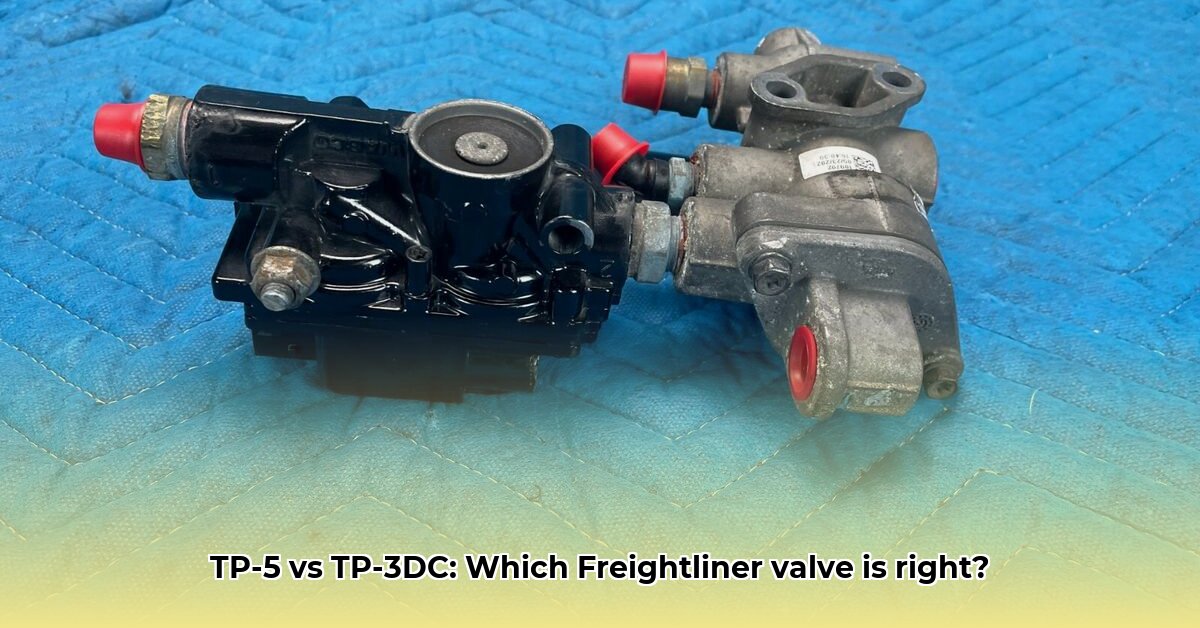
This guide compares two Freightliner tractor protection valves: the TP-5 (BW802701) and the TP-3DC (065706/BW065706), assisting fleet managers and mechanics in selecting the optimal valve for their needs. The core difference lies in the readily available information and specifications for each valve, impacting compatibility and reliability assessments. For more information on tractor protection systems, see this helpful resource.
Understanding Tractor Protection Valves
Before diving into the comparison, it's crucial to understand the function of a tractor protection valve (TPV). A TPV is a safety device preventing air loss from the trailer air lines in case of disconnection, thereby preventing brake failure and ensuring continued safety. This safeguard is critical for maintaining operational integrity and driver safety.
TP-5 (BW802701) vs. TP-3DC (065706/BW065706): A Detailed Comparison
The following table compares the key features of the TP-5 and TP-3DC valves:
| Feature | TP-5 (BW802701) | TP-3DC (065706/BW065706) | Considerations |
|---|---|---|---|
| Part Number | BW802701 | 065706/BW065706 | Essential for accurate ordering. |
| Manufacturer | Information not readily available | HPOPUAUTO (or equivalent, source dependent) | A known manufacturer offers better traceability and potential warranty support. |
| Port Configurations | Specific details require further investigation. | 3/8" NPT Control, 1/4" & 1/2" NPT Stoplight, Tractor Control | Clearly defined ports simplify installation and ensure correct connections. |
| Pressure Ratings | Requires further research; consult OEM manuals. | Requires further research; consult OEM manuals. | Crucial for ensuring compatibility with your air brake system. |
| Flow Rates | Requires further research; consult OEM manuals. | Requires further research; consult OEM manuals. | Impacts braking system responsiveness; safety-critical. |
| Material Composition | Material specifications unavailable. | Requires further research; consult OEM manuals. | Affects valve longevity and durability. |
| Compatibility | Requires verification with your Freightliner model. | Requires verification with your Freightliner model. | Always verify compatibility to prevent installation issues. |
| Pricing | Varies; check with parts suppliers. | Varies; check with parts suppliers. | Obtain quotes from multiple suppliers for cost comparison. |
Isn't the lack of readily available information for the TP-5 concerning? This highlights the importance of thorough vetting before selection.
Installation: Adhering to OEM Guidelines
Detailed installation instructions are beyond the scope of this guide. Crucially, always consult your Freightliner's official service manual. Improper installation poses serious safety risks and may void warranties.
Troubleshooting and Maintenance
Common issues include leaks and faulty switches. Regularly inspect for leaks and use a pressure gauge to check system integrity. Consult your Freightliner service manual for a recommended maintenance schedule, crucial for extending valve lifespan and maintaining optimal performance. Proactive maintenance is considerably more cost-effective than reactive repairs.
Selecting the Right Valve: A Balanced Perspective
While the TP-3DC presents a more readily accessible information profile, allowing for easier compatibility verification and potentially providing better warranty support, the TP-5 might suffice if its specifications are independently confirmed and match your specific requirements. The lack of detailed information about the TP-5 makes it a riskier choice unless verified through independent sources. Always prioritize safety and compatibility.
Conclusion: Informed Decision-Making
Choosing the correct TPV is vital for fleet operation and safety. This comparison aims to guide informed decision-making. Thorough research and verification of compatibility with your specific Freightliner model are paramount to ensure safe and efficient operation. Remember, the safety of your drivers and the efficiency of your fleet hinge on making the right choice.